Voice memos on your phone are fine until you have to actually find, transcribe, and summarize a two-hour meeting. The Plaud Note is a dedicated AI recorder the size of a credit card that’s built to solve exactly that problem — capture, transcribe, and summarize. Here’s what it does well, and where the real costs are.
Best for: Professionals, students, and journalists who record meetings, lectures, and calls and want automatic transcription and summaries
A credit-card-thin AI recorder that captures clear audio and turns it into searchable transcripts, speaker-labeled summaries, and notes across 112 languages. The hardware is clever, but the real value is the AI transcription — and it's subscription-backed, so factor in the ongoing cost.
Pros
- Ultra-thin (2.99mm), card-sized
- 30h recording, 60-day standby
- 112-language transcription
- Automatic speaker labels and summaries
- Works for calls (magnetic case)
- Enterprise-grade privacy
Cons
- Best features need a subscription
- Premium price vs. a phone voice memo
- Small — easy to misplace
Key Features
- Credit-card size (2.99mm thin, 30g)
- 64GB / ~480 hours storage
- 112 languages, ~95% accuracy
- AI summaries, mind maps, speaker labels
- Dual-mode: ambient + phone call
- Plaud App / Web / Desktop
What the Plaud Note Is
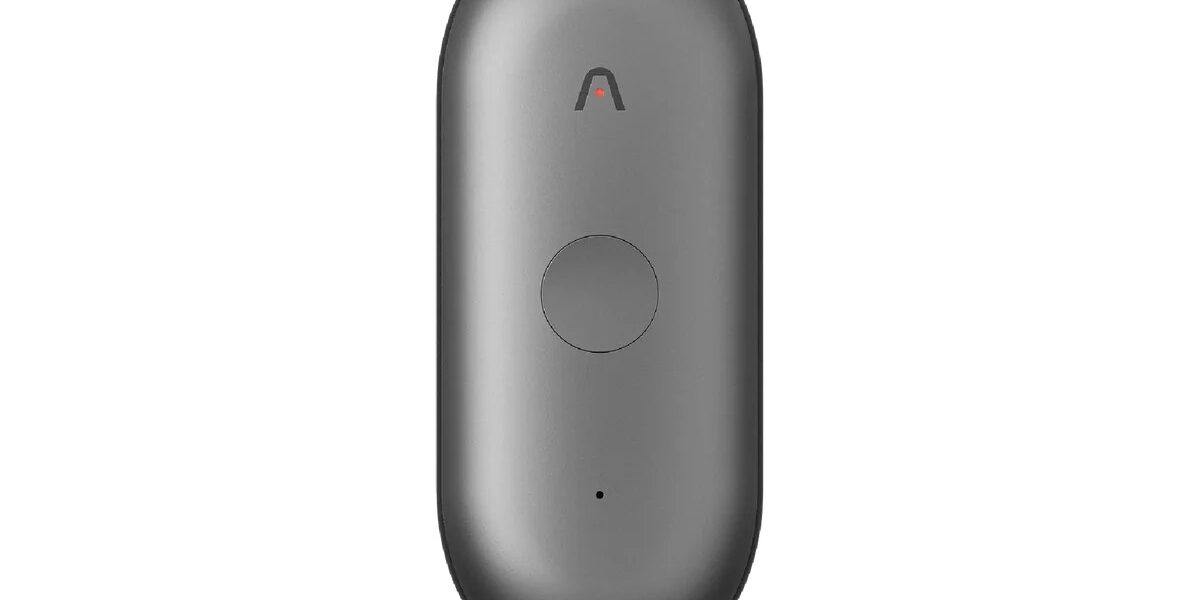
The Plaud Note is a card-sized AI voice recorder — 2.99mm thin and 30 grams — that records audio and turns it into transcriptions, speaker-labeled summaries, and structured notes. It works in two modes: ambient for in-person meetings and lectures, and a phone-call mode that captures both sides of a call via its magnetic case and a vibration sensor.
What It Does Well
Transcription is the core value: 112 languages at roughly 95% accuracy, powered by current large language models, with automatic speaker labels and custom vocabulary for names and industry terms. It generates summaries, mind maps, and to-do lists, and an “Ask PLAUD” feature lets you query your recordings. The 64GB storage holds around 480 hours, and the battery lasts up to 30 hours of continuous recording.
Where the Costs Are
The catch is that the full experience is subscription-backed — the free tier gives you 300 transcription minutes a month, while the Pro plan bumps it to 1,200. That’s a real ongoing cost on top of the device. It’s also a dedicated gadget, so it’s competing with your phone’s voice-memo app for simple recordings.
Who It’s For
- Professionals who live in meetings and calls
- Students recording lectures
- Journalists and consultants who need searchable notes
Who Should Skip It
- Anyone who records rarely enough that a phone suffices
- Buyers who don’t want a subscription
- People who only need occasional, short transcriptions
Final Verdict
The Plaud Note is a genuinely useful niche device: it makes recording and, more importantly, retrieving and summarizing conversations far easier than a phone memo. If you record meetings regularly and can justify the subscription, it’s a strong tool. If you’d only use it occasionally, your phone already covers most of the job.
As an Amazon Associate, we earn from qualifying purchases.
Do I need a subscription?
It includes a free Starter plan (300 transcription minutes/month); heavier use needs the Pro plan at 1,200 minutes/month.
Can it record phone calls?
Yes — with the magnetic case attached to your phone, it captures both sides of a call using its vibration sensor.
Is my data private?
Plaud cites ISO 27001, SOC 2 Type II, HIPAA, and GDPR compliance, with local encryption and cloud processing only with authorization.